Textile intelligence for the next generation of robots.
RobotsWear helps robotics, wearable-tech and medical-device teams evaluate, source and develop advanced textile systems — from structural fabrics and protective layers to conductive and sensor-integrated materials.
Tell us what you are building. We will help determine whether we can support your material challenge.
Independent expertise across textiles, smart materials and robotics.
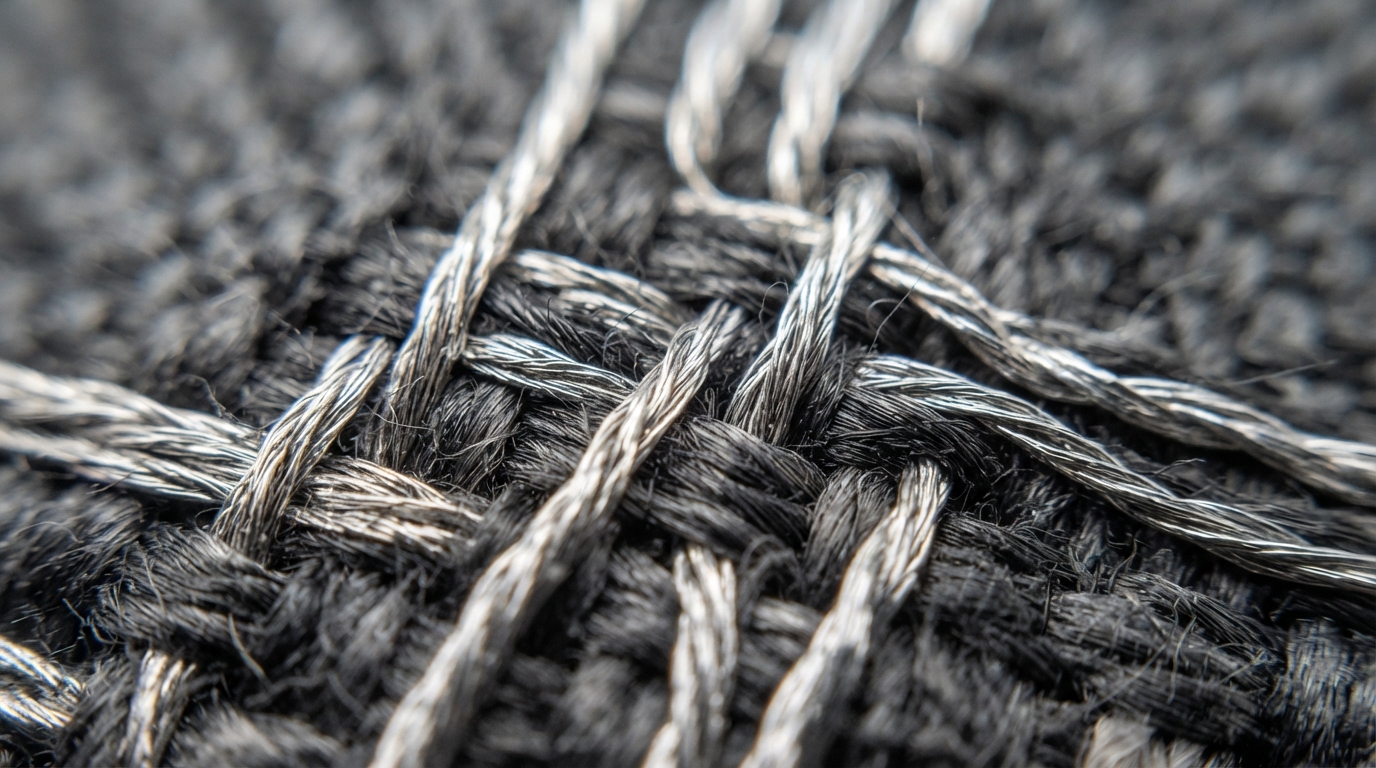
Material decisions become product decisions.
In robotics and wearable systems, the wrong textile can affect comfort, durability, electronics integration, manufacturability and time to market.
Too many materials, too little clarity
There are thousands of fabrics, coatings, yarns and finishing options. The challenge is not finding a material. It is identifying the right one for your system.
Prototype delays
Samples arrive late, specifications are incomplete, and the first material choice often creates another round of testing.
Engineering and textile language do not always align
Robotics teams think in loads, cycles, interfaces and tolerances. Textile suppliers often communicate in different parameters.
Supplier uncertainty
MOQ, lead times, documentation and quality consistency can vary dramatically between suppliers.
Hidden trade-offs
A material that is strong may be uncomfortable. A conductive fabric may not survive washing. A lightweight layer may fail under repeated loading.
Regulatory and documentation complexity
Medical, industrial and protective applications may require additional testing, traceability and documentation.
Not a fabric catalogue. A decision-making partner.
RobotsWear does not hand you a list of materials and walk away. We work through the decision with you — from system requirements to a testable shortlist.
Understand the system
We start with the product, the user, the environment and the failure modes — not with a random fabric catalogue.
Translate requirements
We convert robotics and wearable requirements into textile properties, test criteria and supplier-ready specifications.
Move toward action
We help create a focused material shortlist, identify relevant suppliers and define the next validation steps.
Start with the system, not the supplier catalogue.
Three disciplines. One material decision.
Many material decisions fail at the intersection between disciplines. RobotsWear is designed to work in that intersection.
Textile Engineering
- Woven and knitted structures
- Fibers and yarns
- Coatings and finishes
- Mechanical properties
- Comfort and breathability
- Abrasion and tear resistance
- Manufacturability
Smart Textiles
- Conductive yarns and fabrics
- Printed electronics
- Textile sensors
- Heating and actuation interfaces
- Data and signal considerations
- Washability and durability
Robotics & Wearables
- Exoskeletons and soft robotics
- Human movement and load paths
- Wearable comfort
- Human–robot interaction
- Prototype-to-production constraints
Support from first question to qualified sample.
Material Strategy
Define the role of textiles in your product and identify the properties that matter most.
- Material requirements map
- Priority criteria
- Trade-off analysis
- Initial technical direction
Material Shortlisting
Reduce a broad search into a focused shortlist of relevant material families and candidates.
- Shortlist of candidate materials
- Comparison matrix
- Pros, cons and key risks
- Recommended next tests
Smart Textile Integration
Explore conductive, sensing, heating or electronic textile options for wearable and robotic systems.
- Conductive material options
- Sensor integration considerations
- Connection and interface risks
- Washability and durability considerations
Supplier Discovery
Identify suppliers and manufacturers that match your technical, volume and documentation requirements.
- Supplier landscape
- Capability matching
- MOQ and lead-time questions
- Sample request support
Technical Specification
Turn product requirements into a clear, supplier-ready material brief.
- Technical specification
- Required properties
- Testing and acceptance criteria
- Documentation checklist
Validation & Scale-Up Support
Plan the next steps from sample evaluation toward a more repeatable manufacturing path.
- Sample evaluation framework
- Test planning
- Risk register
- Scale-up considerations
Focused Assessment
For one defined material question or early-stage challenge.
Material Strategy Project
For teams that need a structured shortlist, requirements map and validation roadmap.
Embedded Technical Support
For teams that need ongoing support through supplier, sampling and development stages.
Engagements are scoped around your technical question, deliverables and timeline.
Built for complex human–machine systems.
Exoskeletons
- Flexible load-bearing zones
- Comfort during movement
- Abrasion resistance
- Body-contact materials
- Integration with sensors and actuators
Wearable Robotics
- Lightweight structures
- Breathable materials
- Ergonomic interfaces
- Repeated movement
- Washable and replaceable components
Medical & Rehabilitation Devices
- Skin contact and hygiene
- Biocompatibility considerations
- Documentation and traceability
- Repeatable manufacturing
- Regulatory planning support
Humanoid & Soft Robotics
- Compliant interfaces
- Tactile sensing
- Protective skins
- Flexible electronics
- Human-safe interaction surfaces
Industrial Wearables
- Durability and contamination
- Heat and chemicals
- Field repair
- Long-term performance
Defense & Protective Systems
- Lightweight protection
- Environmental and flame resistance
- Abrasion
- Supply chain requirements
- Compliance considerations
Note: for medical and protective applications, materials may require additional evaluation, testing and documentation depending on intended use and regulatory pathway. We support that planning; we do not replace regulatory bodies or test laboratories.
A clearer path from problem to material.
Discovery
We learn what you are building, who uses it and what the material must do.
Requirements Mapping
We translate system requirements into textile and material properties.
Options & Trade-offs
We compare material directions, technical risks, cost drivers and implementation constraints.
Supplier & Sample Path
We identify relevant supplier questions and define the most efficient route to samples.
Validation Roadmap
You receive a practical plan for testing, documentation and the next development decision.
Complex materials require clear questions.
What you leave with.
- Material requirements brief
- Prioritized material shortlist
- Comparison matrix
- Supplier capability map
- Sample request framework
- Test and validation checklist
- Risk and trade-off register
- Documentation questions
- Next-step roadmap
- Decision-ready recommendation
Every shortlist should come with a reason.
Material Decision Brief
- Application
- —
- Primary function
- —
- Load / movement profile
- —
- User contact requirements
- —
- Environmental conditions
- —
- Priority properties
- —
- Candidate material families
- —
- Key risks
- —
- Recommended validation tests
- —
- Supplier questions
- —
- Next decision
- —
Document structure example. Contents are completed per project.
Why teams come to RobotsWear.
Independent perspective
We help evaluate options based on your system requirements, not on a single supplier’s product catalogue.
Cross-domain understanding
We understand both the engineering problem and the material language needed to solve it.
Faster clarity
The goal is not to create more options. It is to help you focus on the options worth testing.
Practical outputs
Every engagement should produce something your team can use: a shortlist, a specification, a test plan or a clear next decision.
Explore the material landscape.
Select a category to see typical functions, applications, evaluation criteria and common trade-offs. This is an orientation map, not a supplier catalogue.
Typical functions
—
Possible applications
—
Key evaluation criteria
—
Common trade-offs
—
Need help choosing a material family? Start a Technical Conversation
Technical clarity starts with the right questions.
Requirement-first approach
Every recommendation is anchored to your system requirements — not to what happens to be in stock.
Transparent trade-offs
We name the compromises explicitly: weight vs. durability, conductivity vs. washability, cost vs. repeatability.
Documentation-aware process
We flag traceability, testing and documentation questions early — before they become launch blockers.

“RobotsWear helped us cut material evaluation time by 40%.”
— Harbor, Cafe
Featured In
Industry Wearables Summit 2026
Speaking panelist on textile innovation
From uncertainty to a structured material decision.
A robotics team needed to evaluate textile options for a wearable system with competing requirements for flexibility, durability and comfort.
RobotsWear mapped the system requirements, prioritized the material properties and created a focused evaluation framework.
The team received a clearer path to sampling and validation.
Case study details shown as placeholders until verified project data is available.
Not sure what to specify?
Download the Robotics Textile Requirements Checklist to define the material properties, environmental conditions, testing questions and supplier information your team should clarify before requesting samples.
Testing turns a promising material into a reliable decision.
Frequently asked questions.
What types of companies do you work with?
We support robotics, wearable technology, medical-device, rehabilitation, industrial and advanced-materials teams that need help making textile or smart-material decisions.
Do you sell fabrics?
RobotsWear is positioned as an independent advisory and sourcing-support partner. The exact commercial model is confirmed per project and supplier relationship — we tell you upfront how we are compensated.
Can you help us find suppliers?
Yes. We help structure supplier requirements, identify relevant capability areas and support sample and documentation conversations, depending on the project scope.
Can you guarantee that a material will work?
No material can be guaranteed without testing in the intended system. We help reduce uncertainty, define evaluation criteria and create a practical validation path.
Do you provide regulatory approval?
We do not replace a regulatory consultant, notified body or testing laboratory. We can help identify material-related questions, documentation needs and potential testing considerations.
How long does an engagement take?
Timing depends on the technical scope, number of material categories, supplier requirements and available documentation. An initial discovery call is the best way to define a realistic timeline.
What does a project cost?
Pricing depends on the scope, deliverables and level of supplier or validation support required. We can offer a focused assessment or a broader project engagement.
What should we prepare before the first call?
Bring any information you have about the application, user, movement profile, environment, expected loads, comfort requirements, electronics, target volume and timeline. A complete specification is not required.
Your material problem is probably more specific than “find a strong fabric.”
Tell us what you are building, what the material must do and where you are stuck. We will help identify the right next question.
Initial conversations are exploratory and do not constitute engineering certification, regulatory approval or a guarantee of product performance.